


Note: This is the third article in this series. For more context, it might help to read the first two (When GIS Wasn’t Really GIS and When AI Went to Work).
The Pragmatic Truth: AI Won’t Take Your Job, But a User Will
One of the stated policies in both of our counties is refreshingly clear: Artificial intelligence will not be used to replace workers.
It will be used to augment staff, automate drudgery, and free time for higher-value work.
That phrasing is deliberate. AI hype has produced a level of anxiety normally reserved for budget season and surprise audit findings. Policy language matters. Staff need to hear, explicitly and repeatedly, that this is not a headcount reduction exercise dressed up as innovation.
When staff ask me directly whether AI is going to take their job, my answer is pragmatic and unapologetic: AI is not going to take your job. The person using AI will.
That framing tends to land. Buy-in has been strong overall. Some people are cautious, which is reasonable. A few are dragging their feet, which is traditional. Most, however, are genuinely interested in eliminating tedious work and becoming more effective at the parts of their jobs that actually require judgment.
It is also worth saying out loud that most of what we are doing does not look like science fiction. It looks like workflow justification. Simplification. Automation. And occasionally, where the problem genuinely demands it, AI applied to the hardest cognitive steps.
The results are real.
What “Real” Looks Like
Take tax billing address changes, a modest but familiar example.
Before automation, each request took roughly 5–10 minutes of staff time, often across multiple layers of government. Someone received the request, validated it, entered the update into multiple systems, and confirmed the change. We process thousands of these every year.
After simplifying the workflow and automating the handoffs, that same request now requires just a few seconds of review time. The repetitive work has quietly disappeared.
That single change saves hundreds of hours per year. Apply the same pattern to dog licensing, FOIA requests, meeting minutes, internal reporting, and routine correspondence, and the cumulative effect becomes hard to ignore.
Across dozens of staff, we are saving thousands of hours. And that is where the problem begins.
Why Efficiency Does Not Fund Capacity
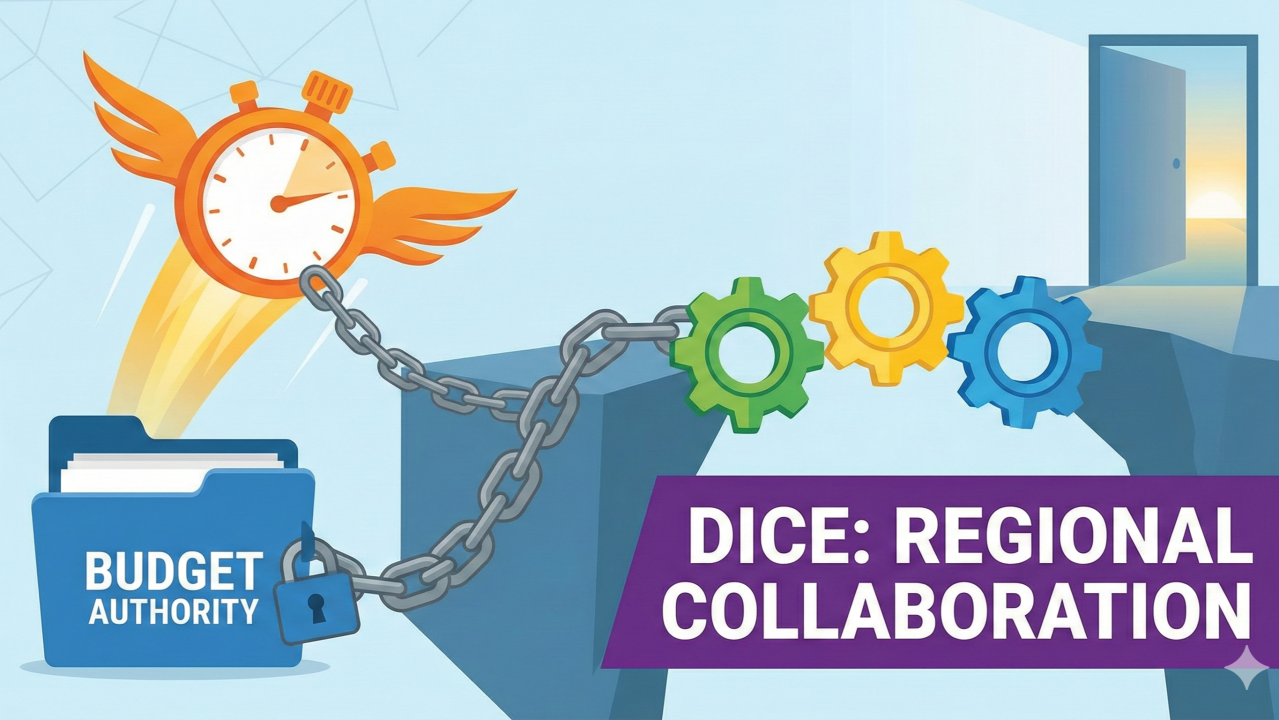
Those efficiency gains do not create budget authority. They do not unlock new positions. They do not appear as line items in Finance.
Local government budgeting is very good at rewarding risk avoidance and headcount control. It is far less responsive to effectiveness. When work disappears, the savings are absorbed rather than reinvested. Success increases demand, not staffing.
As departments see what is possible, requests arrive faster than a small technical team can realistically absorb. We can produce demos and prototypes that clearly demonstrate value. Turning those into production systems requires documentation, monitoring, maintenance, support, and redundancy.
This is the “last mile” problem of government innovation. What we are doing is research and development inside live production environments. That may be exciting, but it is not a sustainable staffing model.
Risk, Boundaries, and What We Will Not Do
Clarity matters as much as capability. So it is important to be explicit about what AI does not do.
- AI does not make statutory decisions.
- AI does not replace professional judgment.
- AI does not operate without human review in high-risk contexts.
We track usage. We train staff. We correct outputs. We refuse use cases where the risk outweighs the benefit.
AI functions as a co-pilot, not an autopilot. That distinction is not philosophical. It is enforced.
Why This Cannot Be Solved County by County
We brought this paradox of efficiency without capacity to our administrators and finance teams. They understood it. They sympathized. And nothing changed.
Not because they disagreed, but because the system has no mechanism to respond.
That reality forced us to step back. Every rural county in Michigan is facing the same constraints. The same software ecosystems. The same workflows. The same staffing shortages. The same retirement wave. The same slow erosion of institutional knowledge.
Each county attempts to solve these problems independently, often by outsourcing the hardest parts to vendors and consultants selling solutions designed for much larger jurisdictions, followed by long-term contracts at premium prices.
Individually, none of us can afford the talent required to break this cycle. Collectively, we can.
Why Regional Collaboration Actually Works
The solutions we were building inside the Digital Information Department were not county-specific. They were transferable. So we started reaching out.
Interest from neighboring counties has been genuine, but movement has been slow. Local government inertia remains undefeated. Even with champions, there is rarely a budget line item labeled “shared innovation.” Efficiency still does not generate authorization.
The strongest traction has come from regional organizations. Planning commissions, economic development groups, universities, and regional collaboratives already operate across jurisdictions. They feel the cost of fragmentation daily and lack the technical capacity to fix it on their own.
These partners are helping fund capacity, validate the model, and move the work forward while counties observe cautiously from a safe procedural distance.
That collaboration became the foundation for what we now call the Digital Innovation Collaborative Exchange, or DICE.
What DICE Is, and What It Is Not
DICE exists to provide shared AI, automation, data, digital communications, and GIS capacity across jurisdictions.
It is:
- Publicly owned.
- Locally governed.
- Regionally shared.
It is not:
- A vendor replacement scheme pursued for its own sake.
- A power grab or forced centralization exercise.
- AI making policy decisions.
- A shiny new silo intended to replace older ones.
Our operating principles are deliberately simple:
- Justification. Does this task need to exist at all?
- Simplification. Remove steps that add no value.
- Automation. Once simplified, automate.
- Selective AI. Apply it only where cognition is the bottleneck.
Beneath all of this sits an unglamorous but essential focus on data foundations. Without clean, authoritative, machine-readable data, AI produces confidence without accuracy, which is one of the more dangerous outputs available.
The Structural Reality We Are Addressing
Two or three people cannot be a permanent operating model. Burnout does not scale.
To build durable capacity, we are exploring structural models that address two constraints local government was never designed for:
- Competitive compensation for scarce technical talent.
- Hiring timelines measured in weeks rather than months.
Without flexibility in pay and speed, capacity leaks out as quickly as it is built. Digital work moves faster than bureaucracy, whether we approve of that fact or not.
Where This Is Going
We believe regional collaboration can create enough excess capacity to finally address local problems at scale. Some counties will join quickly. Others will arrive at the traditional pace of government. That is normal.
What matters is that a path exists.
We are building, quietly and deliberately, a regional resource that allows local governments to modernize together, share costs, retain control, and avoid vendor lock-in.
Open tools. Open standards. Public ownership.
It is slow work. It is frustrating work. And it is necessary work. But, it is also rewarding and interesting work.
That is the vision behind DICE.
Author’s Note
This article is the third in a short series tracing an unexpected evolution. It begins with a traditional GIS department, wanders into something called a Digital Information Department, and eventually arrives at a regional collaboration now known as DICE. None of this was planned in advance, which may sound familiar to anyone who has ever worked in local government.
The pieces were written in sequence, but more importantly, they were lived in sequence. Each article responds to a problem that only became visible after the previous one was addressed. The later conclusions were not hiding in the opening paragraphs, waiting to be discovered. They simply did not exist yet.
Taken together, the series does not advocate for any particular technology. Instead, it attempts to describe a structural reality that many local governments are encountering, often with some surprise. Simplification creates capacity. Capacity invites leverage. Leverage exposes incentives. Incentives, in turn, decide whether progress quietly embeds itself or politely evaporates after the pilot phase.
AI happens to be the catalyst that made these dynamics easier to see, rather like turning on a brighter light in a very cluttered room. The furniture was already there. Data, governance, staffing models, and institutional incentives matter far more than any single tool, no matter how enthusiastically it is demonstrated.
I am sharing this work publicly because the challenges described here are not unique to one county, one department, or one state. They are systemic. While the path we are exploring will not fit every jurisdiction, the questions underneath it are broadly applicable, particularly for organizations that discover they have modernized just enough to notice how complicated things still are.
If nothing else, I hope this series helps explain why well-intentioned modernization efforts so often stall, and why collaboration, rather than heroics, may be the only approach with a reliable shelf life.